

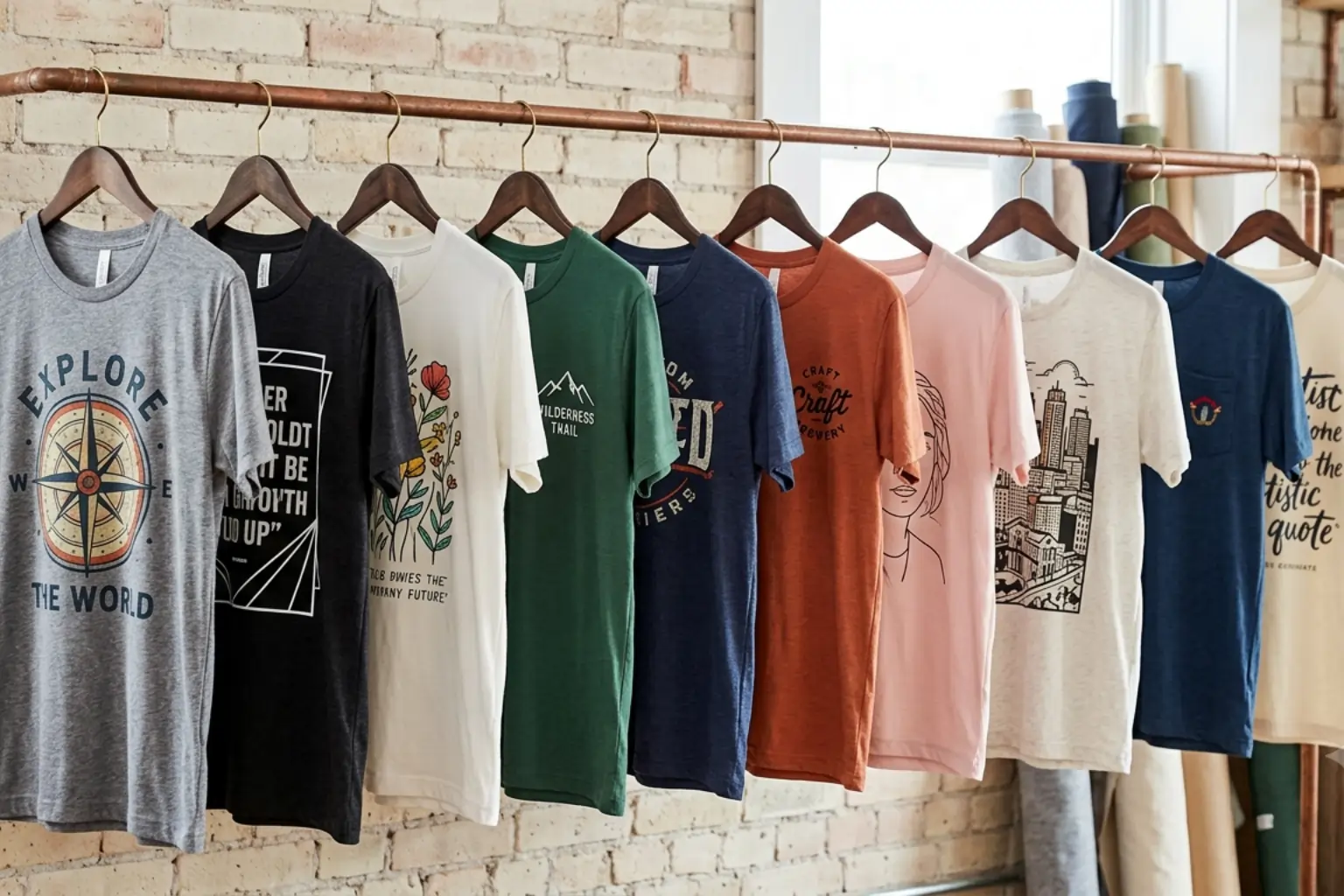
A t-shirt starts as flat fabric. Nothing on it says anything about you, your event, or your business. Custom graphic t-shirts change that equation, turning a plain 180 GSM cotton tee into something with a story, a logo, or a message printed straight into the fibers. The process sounds simple from the outside. Upload an image, pick a shirt, wait for delivery. What actually happens between those two points determines whether the print lasts two washes or two years. Most people assume printing is printing. It is not. The method matters as much as the artwork itself.
Table of Contents:
What Makes a Design File Actually Print-Ready?
This is where most custom orders go wrong before they even reach a printer. A logo that looks sharp on a phone screen can turn muddy on fabric if the resolution is too low or the file format is wrong.
Vector files win for logos and text-based designs, and there’s a reason for that. AI, EPS, and SVG formats scale up or down without losing a single sharp edge. Raster files behave differently. A photograph or hand-drawn piece saved as JPEG or PNG needs real resolution behind it from the start, something close to 300 DPI at the size it’ll actually print, or the shirt comes out pixelated once it’s enlarged.
Then there’s color, which trips people up more than they expect. A screen shows RGB. Fabric prints in CMYK. Those two systems don’t line up perfectly, so a shade that looks vivid on a laptop can shift once it hits ink and cotton. This is exactly why a proof matters before the full run goes to print, catching that mismatch while it’s still one shirt instead of fifty.
Choosing the Right Printing Method for Custom Graphic T-Shirts
Not every design suits the same technique, and this is where custom graphic t-shirts either hold their color for years or fade within a season.
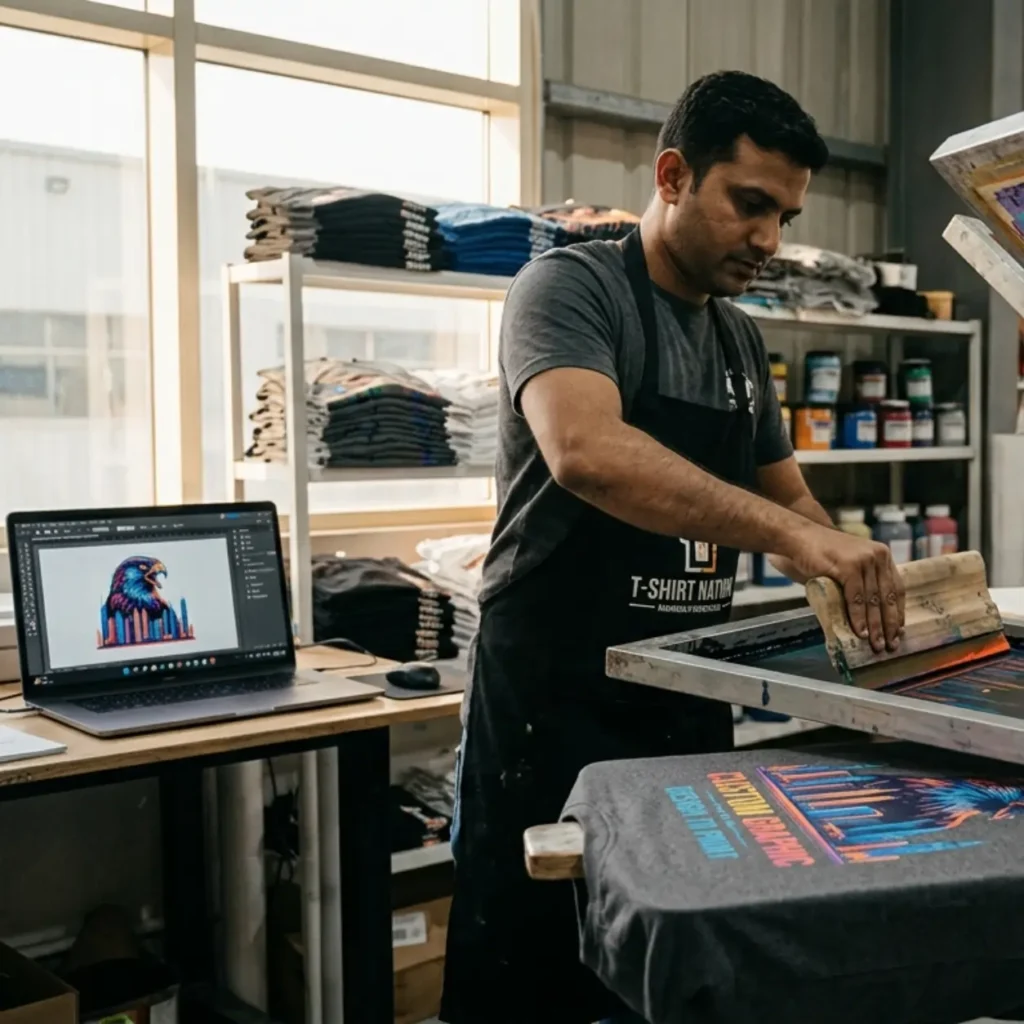
Direct-to-Film printing has become a common choice for detailed, multi-color designs because it transfers a full-color image onto fabric without the setup cost of screen printing, making it practical for smaller batches. Screen printing still wins for large bulk orders where the same design repeats across dozens or hundreds of shirts, since ink cost per unit drops sharply at volume. Sublimation printing works differently again. It bonds dye into polyester fibers rather than sitting on top of the fabric, so it suits sportswear and jerseys where flexibility and breathability matter more than working on cotton.
Fabric choice sits underneath all of this. A 180 GSM combed cotton tee holds screen print ink and DTF transfers well because the tighter weave gives the design a stable surface. Thinner or blended fabrics can shift the outcome, sometimes for better stretch, sometimes at the cost of print sharpness.
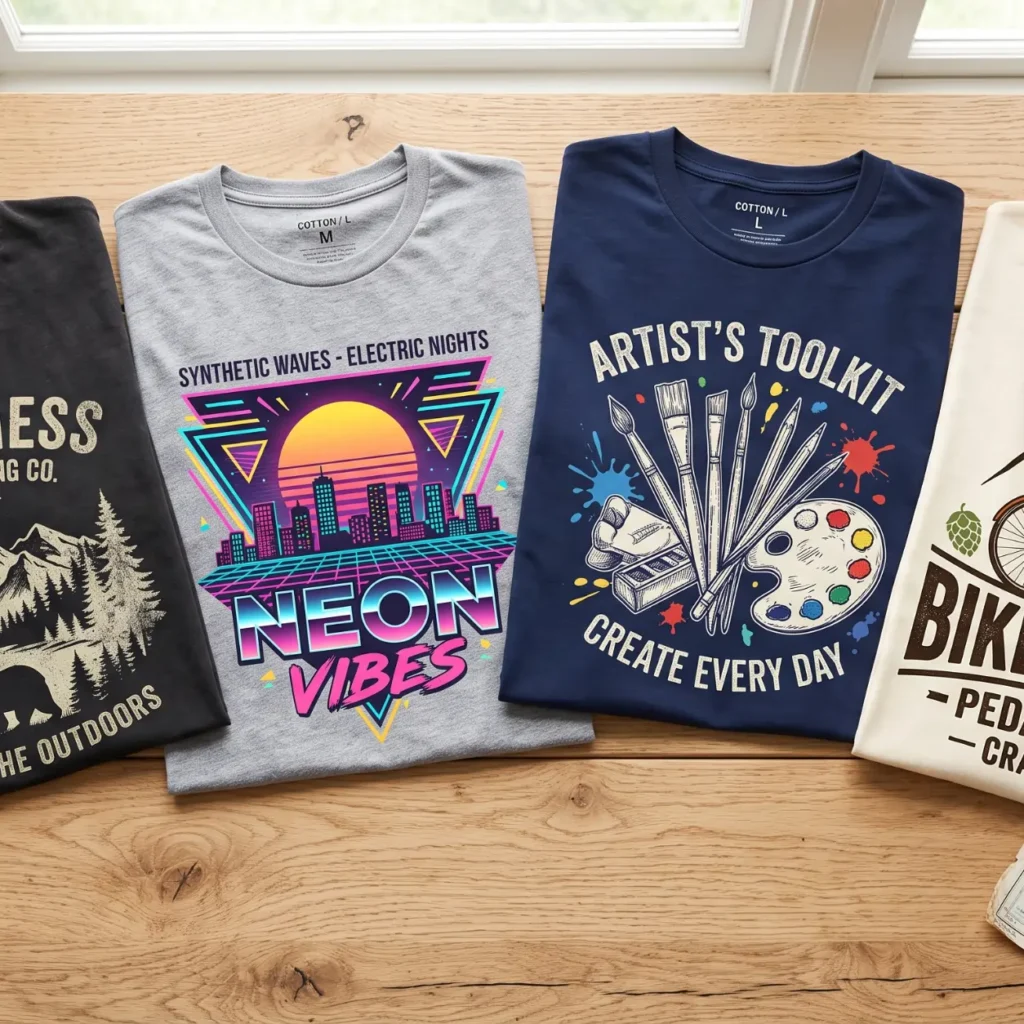
Bulk Orders and Business Branding
Corporate teams, schools, and event organizers rarely need one shirt. They need fifty, or five hundred, all matching. Bulk t-shirt printing Dubai orders typically run through screen printing once quantities climb, partly because setup costs get spread across more units and partly because color consistency is easier to hold across a large batch than with digital methods.
Uniforms bring their own considerations. A chef coat, a polo for front-of-house staff, or a safety vest for site workers all need printing that survives repeated industrial washing, not just a few casual wears. That durability question is worth raising directly with whoever handles the production, before committing to a full order.
What to Check Before Placing an Order?
A few practical questions save time later. Ask what file formats are accepted, whether a physical or digital proof comes before production, what the turnaround time looks like for the specific method and quantity involved, and whether delivery covers your emirate or just the city where the printer is based.
Free design support exists at many UAE printing studios, including layout, color matching, and placement guidance, which helps if the artwork was never built with printing dimensions in mind to start with.
Final Thoughts
Custom graphic t-shirts sit at the intersection of design and manufacturing. Getting the file right matters as much as picking the right print method, and the fabric underneath both decisions quietly shapes how the final product wears and washes over time. Studios like T-Shirt Nation UAE handle these variables daily, which is worth keeping in mind if you’re weighing file formats or print methods for your own order. Before your next order goes out, what does your design actually need from the printing process, longevity, color accuracy, or speed?
FAQ
It depends on the printer, but most bulk pricing tiers start somewhere around 20 to 25 pieces. Below that, you are usually looking at standard per-unit rates. Ask for a quantity breakdown before committing so you can see where the next price drop happens.
Not always, and that is normal. Screens display color in RGB, fabric printing works in CMYK, so slight shifts happen. A design proof before production is the best way to catch anything off before it gets printed on fifty shirts instead of one.
DTF handles small quantities and detailed, multi-color artwork without the setup cost screen printing needs. Screen printing only becomes cost-effective once you are ordering in bulk with a single repeated design.
Photos work fine as long as the resolution holds up at the final print size. Low-resolution images pulled from social media or messaging apps often look blurry once enlarged onto fabric, so start with the highest-quality file you have.
Generally yes. Uniforms go through more frequent washing, so durability under repeated laundering matters more than it does for a one-off event shirt. Worth confirming directly with your printer if the shirts are meant for daily work use.