
A crew shirt at an outdoor Dubai activation in summer has a tough brief. It has to stay readable from a distance, breathe in the heat, and keep its print after repeated washing. Printed t-shirts Dubai businesses order for marketing work best when the design, fabric, and print method all fit the job. Below is a practical breakdown of what to print for events, staff, giveaways, and campaigns, plus the checks worth making before artwork is approved.
Table of Contents:Match the Shirt to the Marketing Goal
Start with the job, then choose the print. Custom printed t-shirts handed out at a community fun run serve a different purpose from shirts worn by a trade show crew, even when the logo is identical. One needs a friendly, wearable design. The other needs clear identification and durability across several shifts. Naming the goal first keeps decisions about color, print size, and fabric from drifting.
Printed T-Shirts Dubai Teams Wear at Events and on Shift
Event and Exhibition Crews
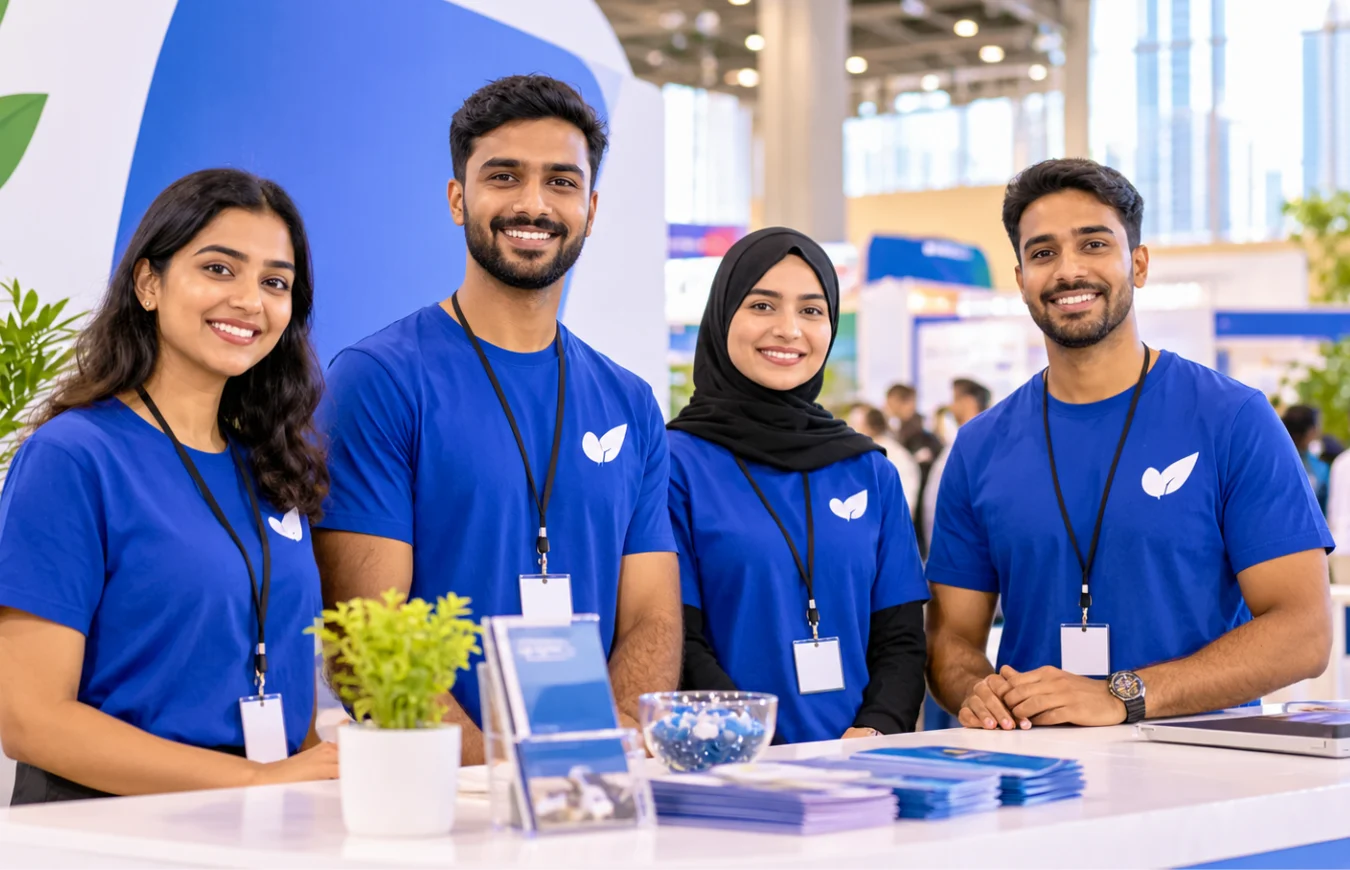
Crew shirts need to be spotted quickly. A single bold logo on the chest, with a larger version across the back, usually reads best in a crowded hall or open venue. Solid colors that contrast with the backdrop help visitors find staff without hunting. Keep artwork to one or two colors where possible, because fine detail disappears at a distance.
Everyday Staff Wear
Daily wear is a different test. Shirts worn weekly go through dozens of wash cycles, so a small left-chest logo often outlasts a large chest print, which can crack or fade sooner. Consistency matters more than size here. Ask for the brand color to be matched across every batch, since a slightly different red between orders shows when staff stand side by side.
One caution for industrial, construction, or logistics roles. A printed tee is not protective equipment. High-visibility garments and other safety clothing follow workplace safety rules, so confirm requirements with your safety officer first.
Giveaways and Promotional Drops
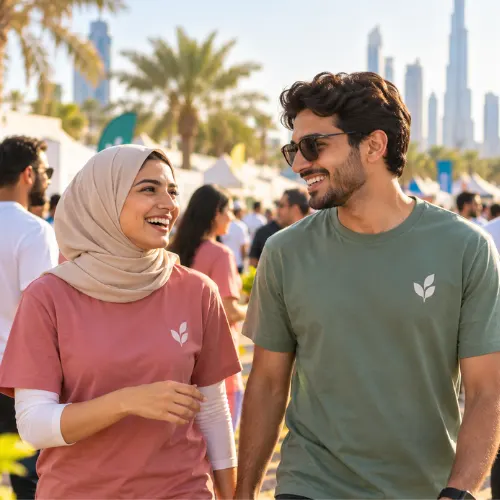
Giveaways work when people actually wear them. That usually means a simple graphic, a modest logo, and a size range that goes beyond medium and large. Branded t-shirts Dubai companies hand out at one-off events often get worn once if the slogan is tied to a single date. A design that still makes sense next year gets worn again, and each wear is another impression.
Awareness and Community Campaigns
Campaigns lean on the message more than the logo. Keep the slogan short enough to read in two seconds. If the campaign touches health, finance, or another sensitive topic, stick to claims you can source and avoid promising outcomes through the shirt itself. It is also worth checking local content standards for public messaging before artwork is final.
Fabric and Print Method Basics
Pick the cloth before the print, because it limits what the print can do. Shirts are sold by GSM, grams per square metre, and that number is a quick read on how the fabric will behave. A light tee drapes well and feels cooler on a hot afternoon outside. A heavier one keeps its shape after months of washing and gives the ink a steadier surface.
Cotton is the usual starting point because it breathes. Blends with polyester dry quickly after a sweaty shift, so teams running sport or outdoor setups often lean that way. One catch: 100 percent cotton can shrink a little in the first wash unless it is pre-shrunk, so check the label before ordering a close fit.
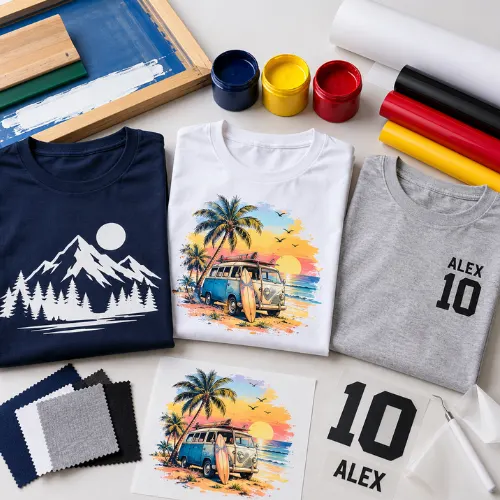
Now the ink. Screen printing pushes ink through a mesh stencil, one screen per color, which is why a six-color logo costs more setup than a one-color mark. It gives a strong, opaque color on dark fabric and makes the most sense for larger runs. Digital printing skips the screens, so photographic artwork and small batches are easier, though dark shirts usually need a white base layer first. Heat transfer suits names, numbers, and last-minute changes, but they can crack on very stretchy fabric.
Show the printer your artwork before you settle on a shirt color. Fabric and method need to agree, and it is far easier to change a shirt choice than a finished run.
Design Checks Before You Approve
Send logos as vector files where possible, since low-resolution images print soft at the edges. Check the color against the actual shirt color too. A light logo on a pale shirt vanishes.
Ask for a digital proof, and for large orders, a single sample you can wash once at home. That one wash tells you more about print durability than any description.
Artwork rights deserve a pause. Only print logos, images, and fonts your business owns or holds a license for. If anyone on the team has sensitive skin, read the care label and ask the printer about fabric and inks before the full run.
Planning Quantity and Timing
Count the people first, then add a small buffer for replacements and late joiners. Spread sizes across the real team instead of assuming an average. Ask for a proof date, a production window, and a delivery date in writing, especially before a fixed event. When you compare options for printed t-shirts Dubai suppliers offer, a clear timeline and a signed-off proof often say more about a printer than price does.
Final Thoughts
A marketing shirt is a small decision with a long tail, since it gets washed and worn for months. Write down the single thing it needs to do, then choose fabric, print, and placement to serve that. Take that one-line brief to T-Shirt Nation or any printer on your shortlist, and judge the proof against it. Which goal is your next order really for?
FAQ
Mostly a logo, and bigger than you think. Chest plus back is enough. Choose a shirt color that pops against the venue walls or stage, since people need to find your team from across a hall. Skip thin lines and tiny text. They blur out fast.
Ask what your artwork looks like first. Flat colors and a big order point towards screen printing. A detailed image or a small batch usually suits digital. Names and numbers on a few shirts are a job for heat transfer. A printer can usually tell at a glance.
Heat alone is rarely the main issue. Washing is. Hot cycles and strong dryers tend to wear prints down faster, so follow the care label, turn the shirt inside out, and air dry when you can. Lighter fabric feels better outdoors, but that’s about comfort, not print life.
Not unless you have the rights to it. Logos, characters, and fonts can all be protected, and printing them without permission can land a business in legal trouble. Use your own artwork or licensed files. For anything borderline, a legal adviser is the right person to ask, not a printer.
No. A printed tee carries your branding and does nothing for protection. Sites with safety rules need proper high-visibility or protective clothing, and your safety officer knows what applies. Staff can still wear a branded shirt underneath where the rules allow it.