
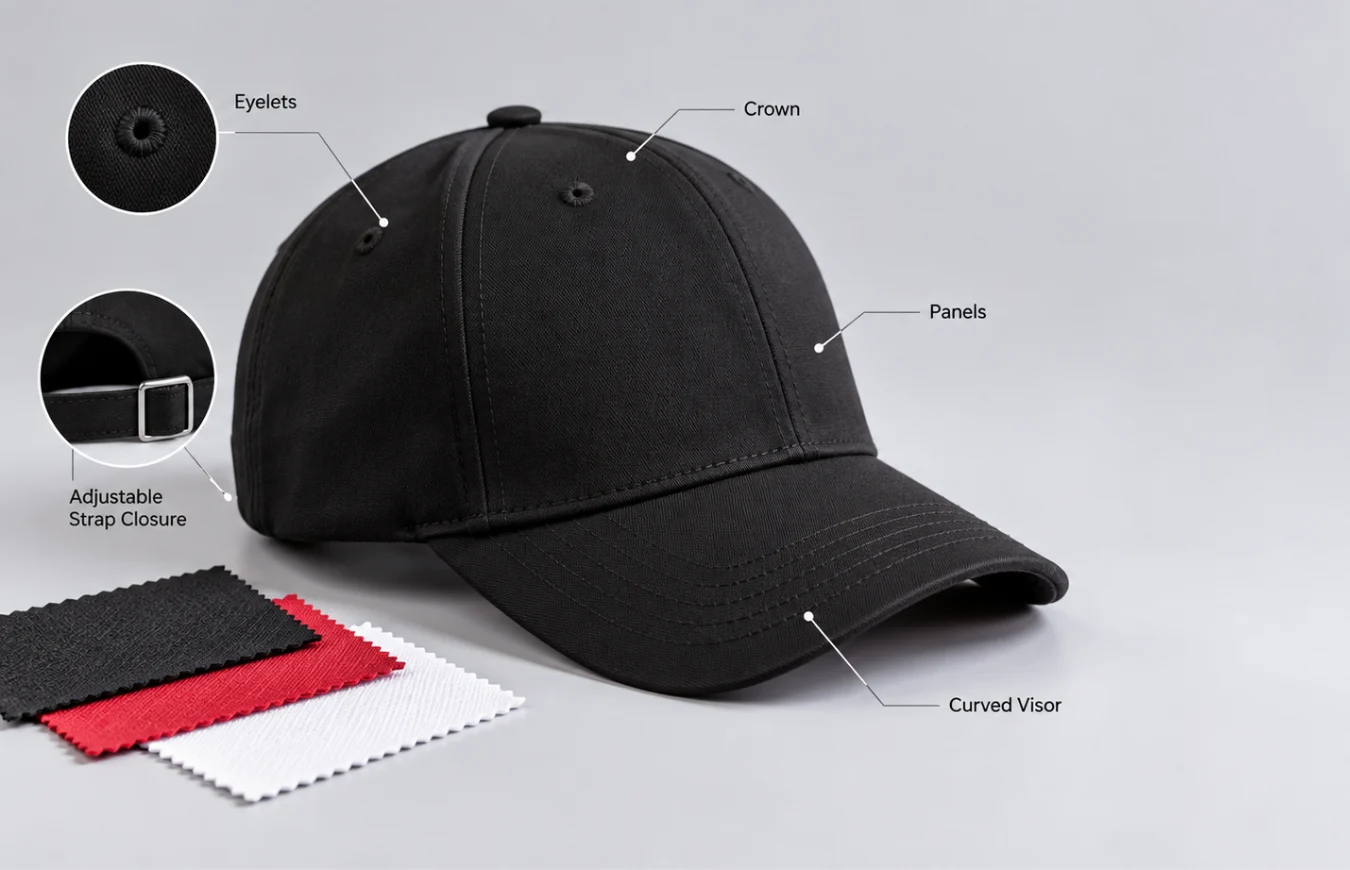
A cap looks like one object, but it is really a small stack of parts. Fabric panels get stitched into a dome, a brim juts out at the front, a band sits against the forehead, and a closure finishes the back. Each part changes how a logo sits and how the cap feels after an hour outside. Knowing them makes custom cap printing decisions far easier, from where artwork can go to which closure suits a group with mixed head sizes.
Table of Contents:What Do Panels and Crowns Actually Do?
The crown is the dome that covers the head. It is built from panels, which are fabric sections stitched edge to edge. Five and six panels are the usual counts, though other builds exist. The front panels sit above the visor and give the largest space for a logo. Side and back panels suit smaller marks, a name, or a number.
Crown height changes the look more than most people expect. A low crown sits close to the head. A high crown gives a taller front surface and a bit more air inside. Small holes called eyelets let heat escape, and lightweight breathable fabric helps in the same way. Heavier cloth holds its shape better but runs warmer.
Why Seams Matter for Custom Cap Printing
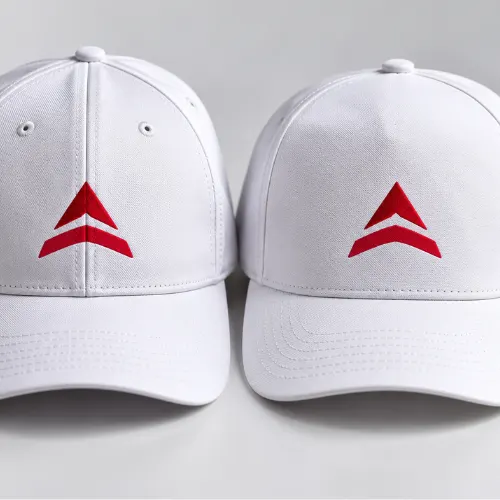
Every seam is a tiny ridge. On a six-panel cap, one runs straight down the front centre, right where a logo usually wants to sit. Print or stitching crossing that ridge can look slightly bent, so designers often keep artwork symmetrical or shift it away from the line. A five-panel cap has a single front panel with no centre seam, which gives a cleaner surface for a wide design.
Structure matters too. A front that holds its shape gives embroidery and prints a steady base, because limp fabric puckers under thread. A classic cap design that stays in shape makes placement more predictable.
Visors: Shade, Shape, and Print Space
The visor, also called the bill or brim, is the curved piece at the front. Most have a firm insert that stops them flopping. A curved visor frames the face and suits everyday wear, while a flat one gives a streetwear look. Outdoors, the visor throws shade over the eyes, forehead, and nose, which makes glare easier to handle during sports or long events. It does not cover everything, as the safety notes below explain.
Closures: Strap, Snap, and Fit
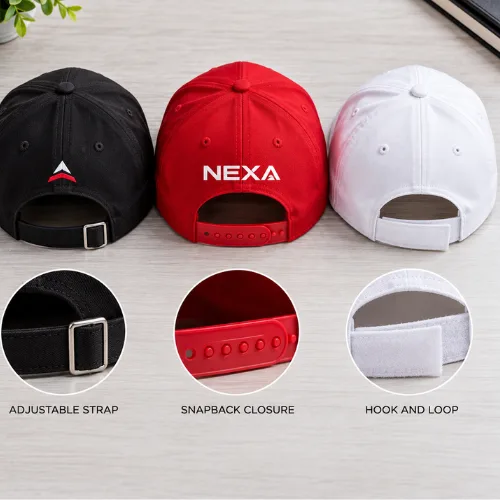
The closure sits at the back and decides who the cap can fit. An adjustable strap covers a range of head sizes with one cap. Snapbacks use plastic studs with several settings, and hook-and-loop tabs work in a similar way. Fitted caps have no adjustment at all, so each wearer needs an exact size.
For teams, event staff, and uniform sets, a strap is simpler because nobody has to guess sizes in advance. A strap that sits flat against the head also avoids pressure points during a long shift.
Fabric, Color and Decoration
Breathable, lightweight fabric is the usual choice for everyday and sport caps, and the cap color narrows the decoration options. Black, red, and white are common shades. Embroidery stitches the design into the fabric and suits logos with clean shapes and few colors. For custom cap printing, methods used on other apparel carry over. DTF transfers handle detailed multi-color artwork, vinyl suits, bold logos and names, and sublimation gives full-color results on polyester. Sublimation works best on light fabric, since the dye cannot lighten a dark base.
Safety Notes Worth Knowing
A cap helps with sun but is not full protection. It leaves the ears and the back of the neck exposed and does not replace sunscreen. Dermatology guidance generally pairs broad-brimmed hats with shade and sunscreen for long outdoor periods, and anyone with skin concerns should ask a doctor.
A printed cap is also not head protection. On construction or industrial sites, impact protection comes from certified safety helmets, and a fabric cap carries no such rating.
Long hours in strong heat call for water, breaks, and shade, whatever a person wears.
Final Thoughts
Panels set the shape, the crown sets the depth, the visor handles shade, and the closure decides the fit. Once each part is clear, decoration choices follow more naturally. T-Shirt Nation, a Dubai print shop, lists a cap with an adjustable strap in black, red, and white that suits both printing and embroidery. Which part of your cap would you change first, the front panel layout or the closure?
FAQ
Think of it as five pieces. Panels form the crown, the visor shades your eyes, eyelets let air through, a sweatband sits against your forehead, and a closure at the back adjusts the fit. Logos usually go on the front panels, with smaller marks on the sides or back.
Most people choose between five and six. A six-panel cap has a seam down the front centre, which can interrupt artwork. A five-panel cap has one smooth front panel, so logos sit more evenly. Pick based on your design rather than trend.
Adjustable straps are the easier pick for mixed head sizes, since one cap covers a range. Fitted caps look neat but need exact sizing for every person, which is awkward with big groups. Snaps and hook-and-loop tabs sit somewhere in between.
Partly. A visor shades the eyes and part of the face, but your ears and the back of your neck stay exposed. Dermatologists still recommend sunscreen and wide-brimmed hats for long outdoor stretches. Ask a doctor if you have skin concerns.