
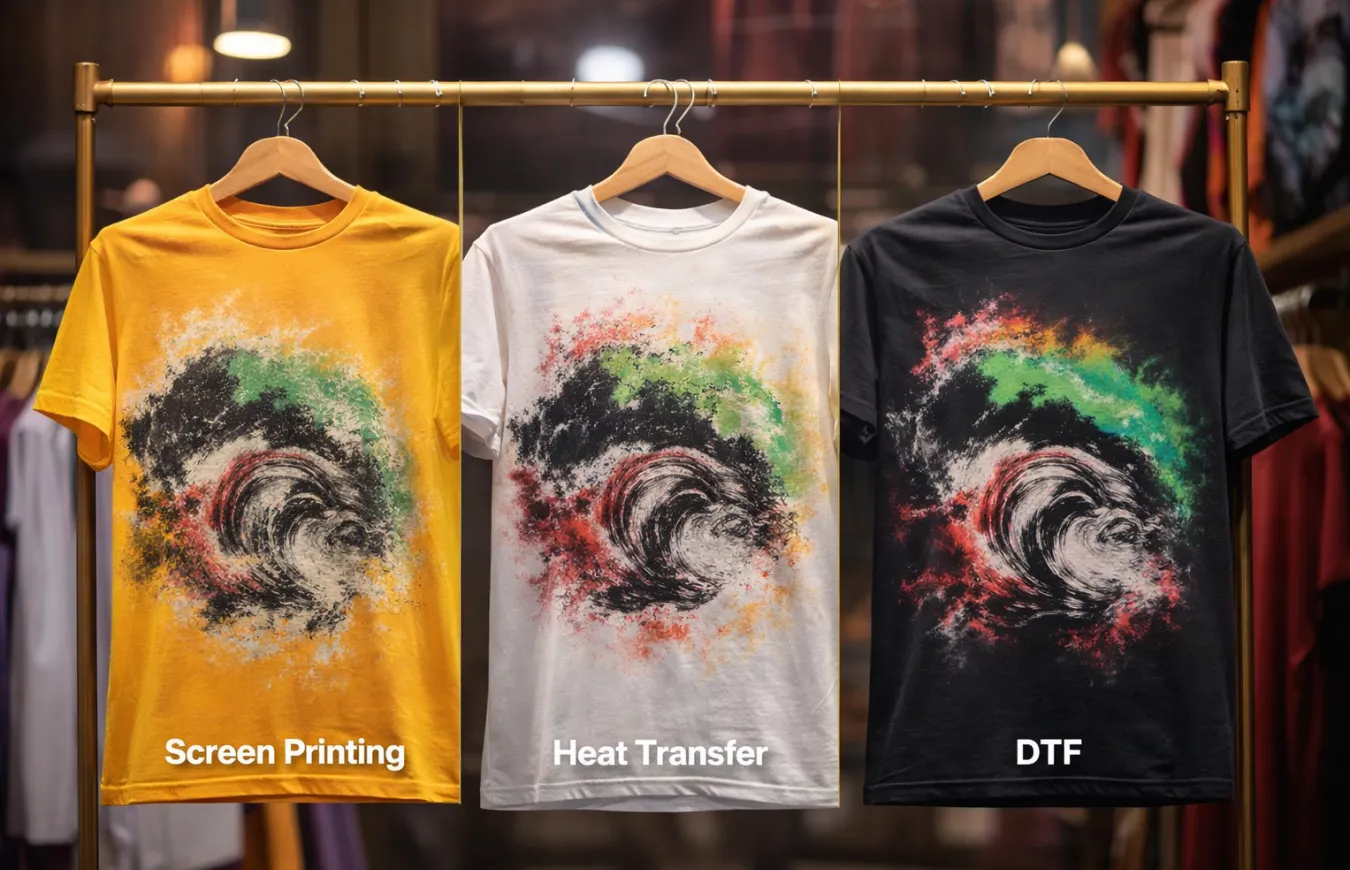
Stop guessing which printing method you need. The “best” choice depends entirely on your design, your fabric, and how many shirts you are ordering.
Table of Contents:
The Printing Dilemma
If you are ordering custom t-shirts for the first time, the terminology can be overwhelming. You want a shirt that looks premium, survives the harsh Dubai washing cycles, and doesn’t crack after a month.
But when you are given the choice between Screen Printing, Heat Transfer (Vinyl), and DTF (Direct to Film), which one actually delivers the best ROI?
There is no single “best” method. There is only the best method for your specific project. Here is the no-nonsense breakdown of how each technology works and exactly when to use it.
1. Screen Printing: The Heavyweight Champion of Bulk
Screen printing is the traditional, old-school method of apparel printing, and it remains the industry standard for large orders.
The Pros:
- Unmatched Durability:The ink soaks deep into the fabric. It will outlast the shirt itself.
- Cost-Effective at Scale:Once the screens are set up, printing 500 shirts is incredibly fast and cheap.
- Vibrant Colors: Perfect for bright, solid brand colors.
The Cons:
- High Setup Costs: Because physical screens must be made, this is not economical for just 1 or 2 shirts.
- Color Limits: Every color requires a new screen. It is not suitable for printing full-color photographs or gradients.
2. Heat Transfer (Vinyl): The Personalization Pro
When you see a football jersey with a crisp name and number on the back, you are looking at Vinyl Heat Transfer.
The Pros:
- Perfect for 1-Offs:No setup costs. You can print a single shirt easily.
- Specialty Finishes: You can use metallic, neon, or reflective vinyl.
- Crisp Edges: Delivers sharp, bold typography and simple graphics.
The Cons:
- Not for Complex Art:You cannot print photographs, gradients, or highly intricate designs with floating elements.
- Breathability: A large block of vinyl feels heavy on the chest and doesn't breathe well in the UAE heat.
3. DTF (Direct to Film): The Modern Game-Changer
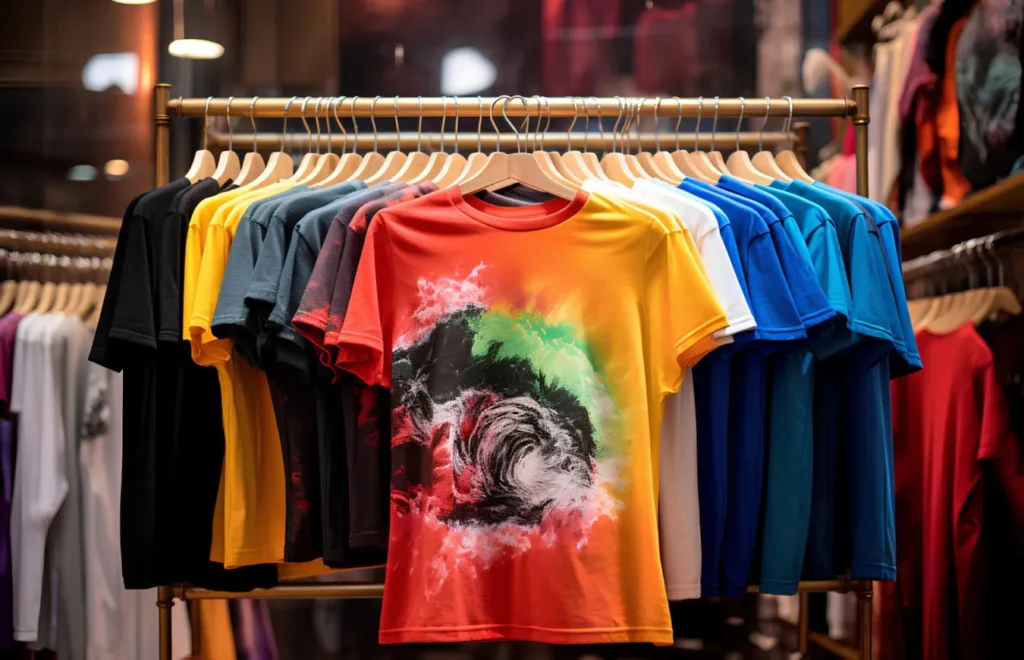
DTF is the newest revolution in custom apparel, bridging the gap between high-quality full-color printing and zero minimum orders.
The Pros:
DTF is the newest revolution in custom apparel, bridging the gap between high-quality full-color printing and zero minimum orders.
- Unlimited Colors: Print photorealistic images, complex gradients, and intricate logos flawlessly.
- No Minimums:Perfect for a single custom hoodie or 20 team shirts.
- Extreme Versatility: Unlike older digital methods, DTF bonds perfectly to any fabric—100% cotton, polyester, blends, or nylon.
- High Durability: The print stretches with the fabric without cracking.
The Cons:
- Slight Texture:It sits on top of the fabric, so it has a slightly smoother, more plastic feel than traditional screen printing ink.
The Quick Comparison Guide
| Feature | Screen Printing | Heat Transfer (Vinyl) | DTF (Direct to Film) |
|---|---|---|---|
| Best Quantity | 50+ (Bulk) | 1 to 20 | 1 to 50+ |
| Color Detail | 1–3 Solid Colors | 1–2 Solid Colors | Unlimited / Photographs |
| Setup Cost | High (Screen creation) | Zero | Zero |
| Durability | ⭐⭐⭐⭐⭐ | ⭐⭐⭐⭐ | ⭐⭐⭐⭐⭐ |
| Ideal Use Case | Corporate Staff Uniforms | Sports Team Jerseys | Custom Streetwear & Gifts |
Ready to Print Your Masterpiece?
You don’t need to be a printing expert; that’s our job at T-Shirt Nation. When you upload your design through our customization tool, the T-Shirt Nation production team automatically evaluates your artwork and quantity to ensure we use the printing method that delivers the best possible result.
FAQ
For single orders or small batches, DTF (Direct to Film) or Vinyl Heat Transfer are your best options. Screen printing requires physical stencils to be made for every color, making the setup cost too high for just one shirt. DTF and Vinyl have zero setup costs, making them perfect for individual custom gifts or personal streetwear.
All three methods are highly durable if cared for properly, but they behave differently. Screen Printing ink soaks into the fabric and is virtually indestructible. DTF bonds seamlessly with the fabric and offers excellent stretch resistance without cracking. To make any print last through heavy UAE summers and washing cycles, always wash the shirt inside out in cold water and never iron directly over the design.
You need DTF (Direct to Film). Screen printing and Vinyl are limited to solid colors and cannot replicate the complex shading of a photograph. DTF acts like a high-definition digital printer, allowing for unlimited colors, gradients, and photorealistic details.
Screen Printing is the undisputed champion for bulk orders. While the initial setup takes a bit of time and money to create the mesh screens, the actual printing process is incredibly fast. Once the screens are ready, the cost per shirt drops significantly, making it the most cost-effective choice for large events, schools, and staff uniforms.
Screen Printing (especially when using water-based inks) typically offers the softest feel because the ink becomes part of the fabric. DTF and Vinyl sit slightly on top of the fabric. While our DTF prints are remarkably thin and flexible, a large block of Vinyl can feel a bit heavy on the chest.
Vinyl Heat Transfer is the industry standard for sports jerseys. Because we can cut individual letters and numbers quickly without setting up new screens for every single player, it is the fastest, sharpest, and most economical way to personalize team uniforms.
Not at all! When you use the customization tool on the T-Shirt Nation website, simply upload your design and select your quantity. Our production experts will automatically review your artwork and choose the printing method that guarantees the highest quality result for your specific order.