
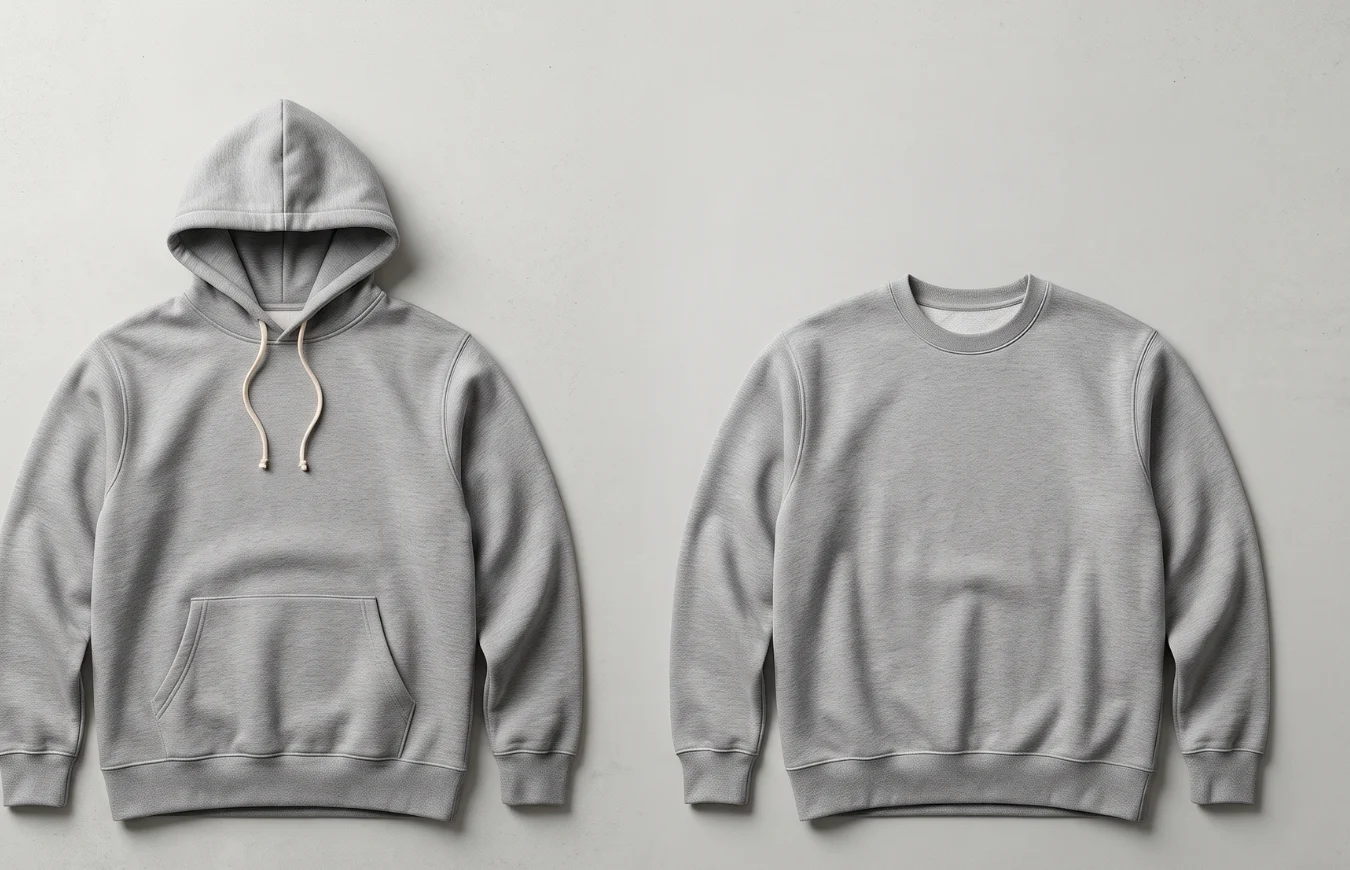
Pick up two grey tops in a shop, and the difference takes about three seconds to spot. One has a hood. The other doesn’t. But the hoodie vs sweatshirt decision gets more interesting once a logo, a team name or a photo has to sit on the front, because the shape of the garment decides where a print can live and how well it holds up. This guide covers the real differences, the fabric basics and the printing factors worth weighing before a batch is ordered.
Table of Contents:What Actually Separates the Two Garments
A hoodie has an attached hood, a drawcord and, in most cases, a pouch pocket across the front. A crew-neck sweatshirt is the plainer cousin, with a round neckline, ribbed cuffs, a ribbed hem and nothing else. Both are knitted pullovers, and both can be brushed on the inside for softness.
The hoodie vs sweatshirt choice usually comes down to coverage and front panel space. Hoodies are generally described as relaxed, unisex cuts suited to winter wear, street style and events. The extra fabric around the neck explains part of that reputation.
Fabric Basics Before You Choose
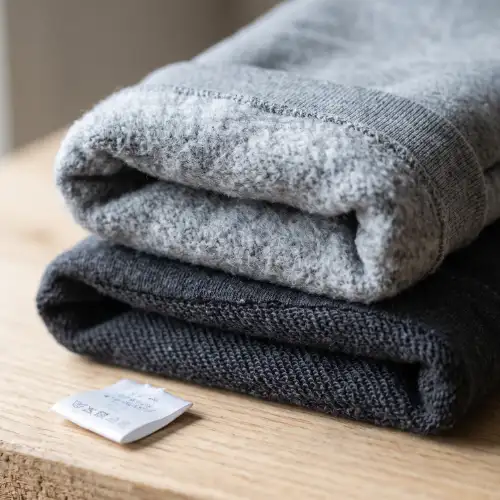
Most hoodies and sweatshirts are made from cotton or a cotton and polyester mix. Cotton is a natural fibre that takes ink and heat-applied film well and feels soft against the skin. Polyester adds shape retention and dries faster, though it reacts differently to heat, and that matters once printing enters the picture.
Inside, the knit is either looped or brushed. Brushed fleece feels warmer and fluffier. A smooth looped interior stays lighter. Weight and composition vary from one manufacturer to the next, so the garment label is the only dependable source. Read it before committing to a batch, particularly when a design relies on one printing method.
Hoodie vs Sweatshirt for Printing: Where Designs Sit Best
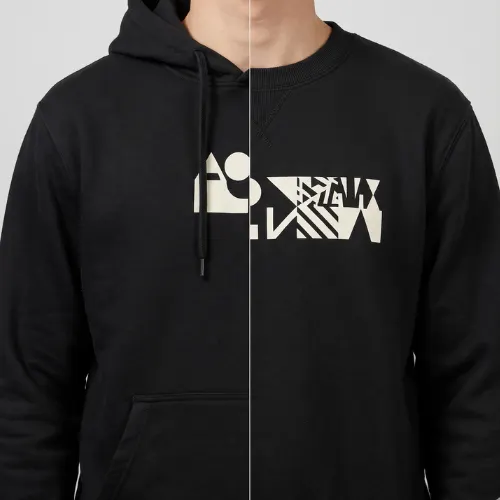
On a hoodie, the pouch pocket claims the lower chest, so a front design has to sit higher or stay compact. Drawcords and the hood seam can crowd the neckline too. Large back graphics also start lower because the folded hood bunches behind the neck. A crew neck sweatshirt gives an uninterrupted panel from collar to hem, which suits wide graphics, slogans and team lists.
Custom hoodie printing brings seams and stitched pockets into play as well. A design that crosses a raised seam can look uneven, so placement deserves a check before the artwork is finalised.
Printing Methods That Suit Each Garment
Direct-to-film printing, usually shortened to DTF, transfers a printed film onto fabric and works across a range of materials, which makes it flexible for both garments. Vinyl suits bold logos, names and numbers. Sublimation relies on polyester, so a cotton-rich fleece tends not to hold a sublimated image the way a polyester top does. Embroidery is another route, and it works best for compact logos on the chest or sleeve rather than large artwork.
Matching the Garment to the Purpose
Start with where the clothing will be worn and for how long. A hoodie fits outdoor events, casual team gear and streetwear styled designs, where extra coverage is welcome. A sweatshirt leans toward a cleaner, more uniform look, such as staff casual days or club wear, and layers easily under a jacket.
Group orders raise a practical question about sizing, since a relaxed cut can run roomier than expected. Colour changes how artwork reads on fabric too, and the best hoodie colour for printing goes into that.
Final Thoughts
Neither garment wins outright. A hoodie offers coverage and a relaxed shape with a smaller print zone, while a sweatshirt gives a flat canvas and a lighter feel. Read the fabric label, match the printing method to the material, and test placement against the pocket and seams before anything goes to print. So which matters more for your design, extra coverage or open space? More printing guides are available on the T-Shirt Nation blog.
FAQ
Mostly the hood. A hoodie has an attached hood with a drawcord and usually a front pouch pocket, while a sweatshirt has a plain crew neck and a flat front. The fabric can be identical, so the real difference is shape and how much front space is left for a design.
Go with the sweatshirt for wide graphics, since the front stays flat from collar to hem. A hoodie works too, but the pouch pocket and drawcords shrink the usable chest area, so designs there tend to be smaller or placed higher up.
Usually a little, because the hood adds fabric around the neck. Warmth also depends on weight and the inside of the knit, so a brushed sweatshirt can feel warmer than a thin hoodie. The label tells you more than the garment name does.
Not quite. DTF and vinyl work across many fabrics, but sublimation needs polyester, so a cotton-heavy hoodie is a poor match for it. Check the fabric composition on the label first, then pick the method that suits that material.