

The prints on t-shirts are not part of the clothes. It is a separate layer, bonded to the fabric with heat or worked into it, and it reacts to friction, detergent and temperature in its own way. That is why a wash cycle that leaves a plain tee fine can leave a graphic tee cracked or dull. If you want to know how to wash printed t-shirts properly, the short version is cooler water, gentler handling and less heat at every stage. The details shift with the print method, so start there.
Table of Contents:Know Your Print Method: DTF, Sublimation and Vinyl
Many digital t-shirt printing studios in the UAE work with three printing methods, and each behaves differently in the laundry.
DTF printing suits full-colour, detailed or photographic designs and works on cotton, polyester and blends. Sublimation printing gives all-over, full-colour coverage on polyester or dry-fit fabric, which is why it turns up on sportswear and team kits. Vinyl printing uses precision-cut sheets pressed onto the garment. It comes in standard, puff and reflective finishes and is common for solid-colour logos, names and numbers. Printable heat transfer vinyl handles more detailed artwork.
Heat connects all three. Because heat helps bond these designs to the fabric, hot water and hot dryers are the usual suspects when a print goes wrong.
You should care about the label. If the printer gave separate instructions, follow those over anything general you read online, this article included.
Before the Wash: Small Checks That Protect the Print
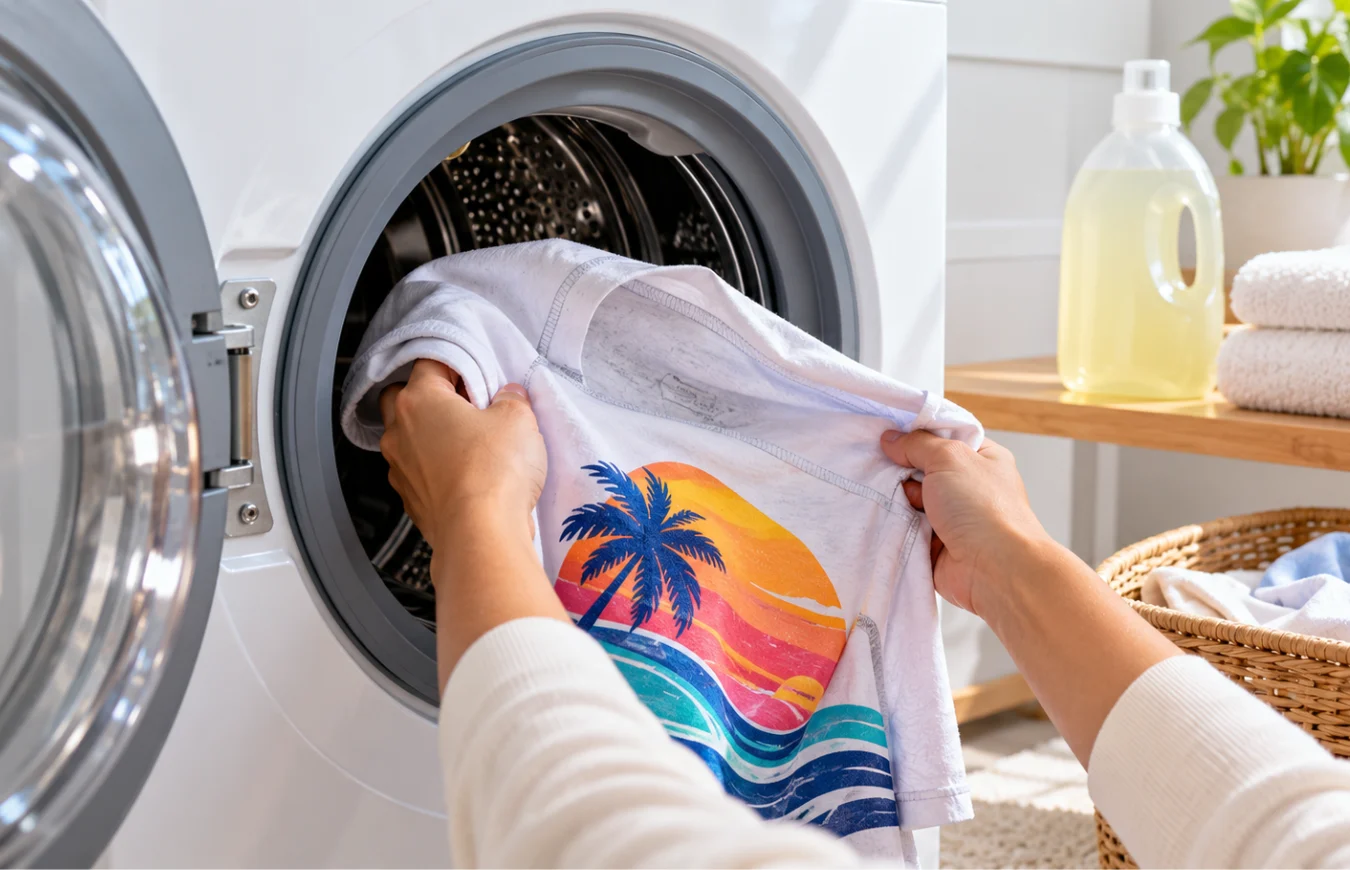
Working out how to wash printed t-shirts starts before the machine even runs. Turn the shirt inside out. That cuts down friction between the printed surface and zips, buttons or rough fabrics like denim and towels. Turn the shirt inside out. That cuts down friction between the printed surface and zips, buttons or rough fabrics like denim and towels. Sort by colour as well, since a dark load can dull a light design.
Just had a shirt printed? Ask the printer how long to wait before the first wash. Guidance differs by method and fabric, and a firm number is theirs to give.
Take a quick look at the print too. Lifting edges or hairline cracks mean the shirt needs a gentle hand wash. For stains, skip bleach and harsh spot removers. A dab of mild detergent worked in with a fingertip, kept away from the design where possible, is a safer start.

How to Wash Printed T-Shirts: Water, Detergent and Cycle
Cold or lukewarm water is the safer option. Pick the gentle or delicate cycle, use a mild liquid detergent, and leave room in the drum, since crowded loads mean more rubbing. Skip fabric softener and bleach unless the label allows them.
Puff and reflective vinyl deserve extra care. Hand washing in cool water, with light squeezing instead of wringing or scrubbing, is kinder to raised and textured finishes. Sublimated polyester and dry-fit pieces also cope well with a gentle cycle and don’t need heavy detergent.
Durability depends on how well the print was applied. Stahls’, a heat transfer vinyl supplier, states that properly applied vinyl can withstand 50+ washes without cracking or peeling when temperature, pressure and dwell time are right. Read that as a benchmark for good application, not a promise about any particular shirt.
Drying Printed T-Shirts Without Cracking or Fading
Air drying is the gentlest route. Hang the shirt inside out or lay it flat, ideally in shade, since long exposure to strong sun can fade colour. If you use a tumble dryer, choose the lowest heat and take the shirt out while it is still slightly damp.
Ironing needs a light touch. Turn the shirt inside out, keep the heat low, and never press directly on the design. A thin cloth between iron and print helps. Puff and reflective vinyl are better left un-ironed.
Storing Printed T-Shirts Between Wears
Only store a shirt once it is fully dry. Trapped moisture is hard on any fabric and can leave prints feeling tacky.
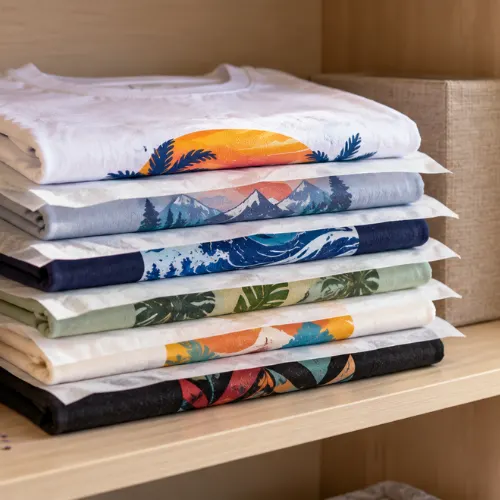
Fold with the print facing inward, or slip a soft cloth or sheet of tissue between stacked printed shirts so designs don’t press against each other. Keep heavy items off raised vinyl. Lightweight sportswear can hang, ideally on a wide hanger to avoid shoulder marks. A cool, dry shelf away from direct sun works better than a sunlit rail.
Signs a Print Is Wearing Out
Fine cracks, lifting corners, a rough or sticky feel and colours that look washed out are the usual signals. Spot them early and you can switch to hand washing, drop the water temperature and skip the dryer.
If a fairly new print fails quickly, contact the printer and share the steps you followed. Fabric type, application method and washing habits all play a part, so a plain description of your routine helps them work out what happened.
Final Thoughts
Caring for printed tees comes down to three habits: cooler water, gentle handling and low heat. The care label and the printer’s own advice always outrank general tips. If you are still weighing DTF, sublimation and vinyl for a future order, the printing methods overview at T-Shirt Nation explains how each one works.
Which shirt in your wardrobe has a print you most want to keep looking sharp?
FAQ
Yes, most of the time. Turn it inside out, pick a gentle cycle with cool water, and use a mild detergent. Check the care label first, since it beats any general tip. Puff or reflective vinyl usually does better with a quick hand wash.
Cold or lukewarm is the safer pick. Heat is what loosens or dulls many prints, so keep the water cool and the dryer low or off. If the care label names a specific temperature, go with that instead of anything you read online.
Air drying is kinder. If you’re short on time, use the lowest heat and pull the shirt out slightly damp, still inside out. High heat can crack or lift some prints, so when in doubt, hang it in the shade.
Usually it comes down to heat, rough washing or how the print was applied. Try cooler water, inside-out washing and air drying. If a fairly new print cracks early, contact the printer with your washing details, because fabric and application method matter too.
Cotton garments, including 180 GSM combed cotton, can shrink slightly during early wash cycles regardless of quality. Ordering a true size rather than a tighter fit generally accounts for that natural shrinkage over time.